Tap a sentence to see it in Spanish, and tap the book to study it. The speaker plays one sentence, the round button plays a paragraph, and the player at the bottom reads the whole story. Press T to show or hide every translation.
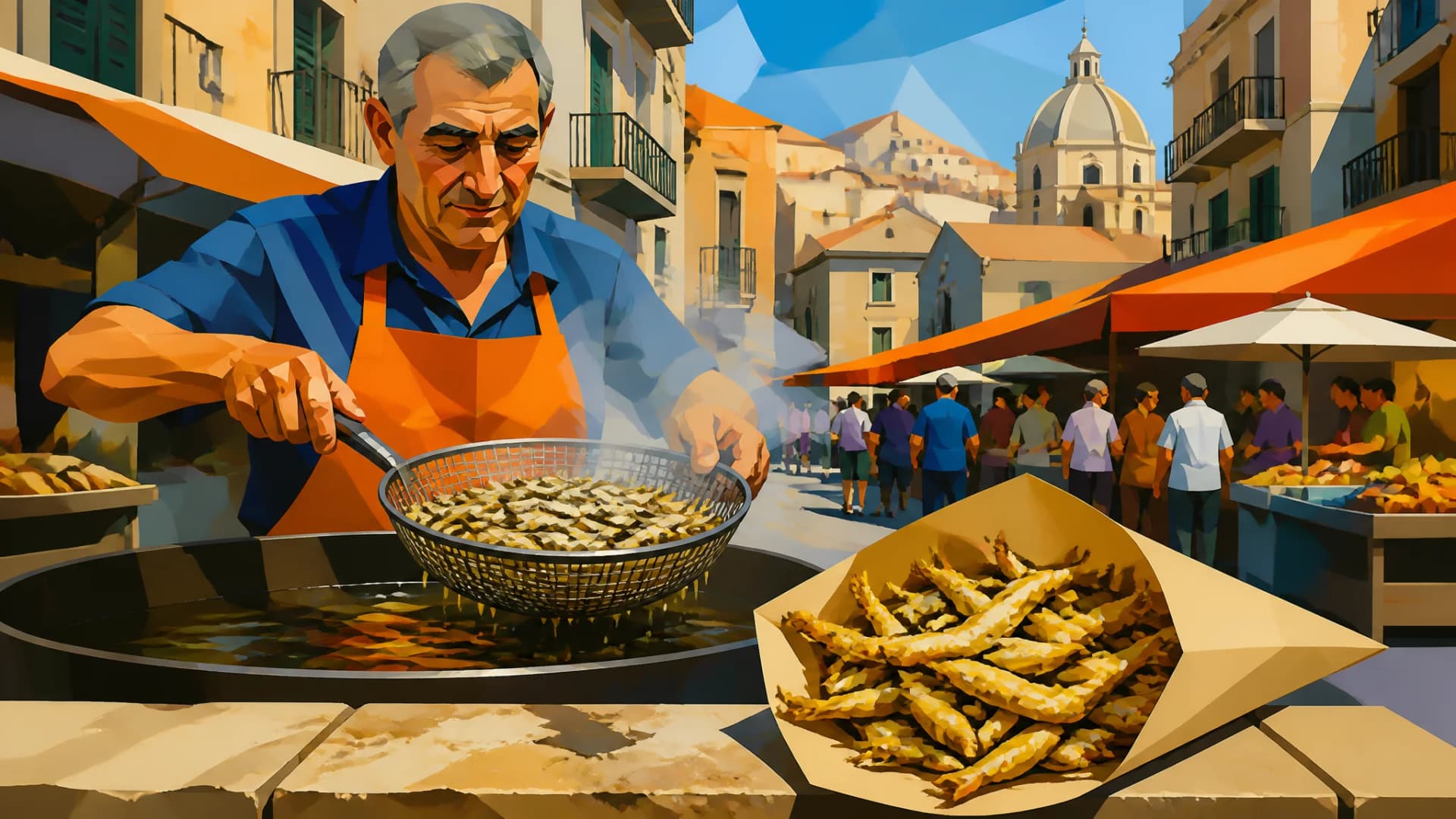
Camogli is a tall , painted fishing town on the Golfo Paradiso , the quiet gulf that curves west of Portofino on the Ligurian coast . This gulf truly earns its name . Once a year , however , the town 's most famous sight is a giant frying pan on the waterfront . The frying pan is made of steel and almost four metres across . Since 1952 , on the second Sunday of May , Camogli has held the Sagra del Pesce , its famous fish festival . Cooks fry fish for thousands of visitors on the feast of San Fortunato , the patron saint of fishermen . The tall fronts of Camogli are a show in themselves . Many of their windows , balconies and cornices are only paint . This decoration tricks the eye , an old Ligurian tradition , and painters still restore the painted fronts today . An old story says the name Camogli comes from the house of the wives , who waited while the men were at sea . Scholars doubt the story , but it fits a town that lived for centuries from fishing and long voyages . In the afternoon , you can board a small boat that crosses the gulf to San Fruttuoso , a medieval abbey first documented in the tenth century . The abbey hides in a tiny cove under the Portofino headland . No road reaches it , so visitors arrive by boat or walk over the hills . In the bay in front of the abbey , a bronze statue called the Christ of the Abyss was lowered onto the seabed in 1954 . It stands about seventeen metres down , and divers still visit it . Back on the waterfront in the evening , the giant pan is cold , but the harbour still smells of fried fish . Stand there a moment , and you understand why the whole town waits for one enormous pan .