Tap a sentence to see it in Spanish, and tap the book to study it. The speaker plays one sentence, the round button plays a paragraph, and the player at the bottom reads the whole story. Press T to show or hide every translation.
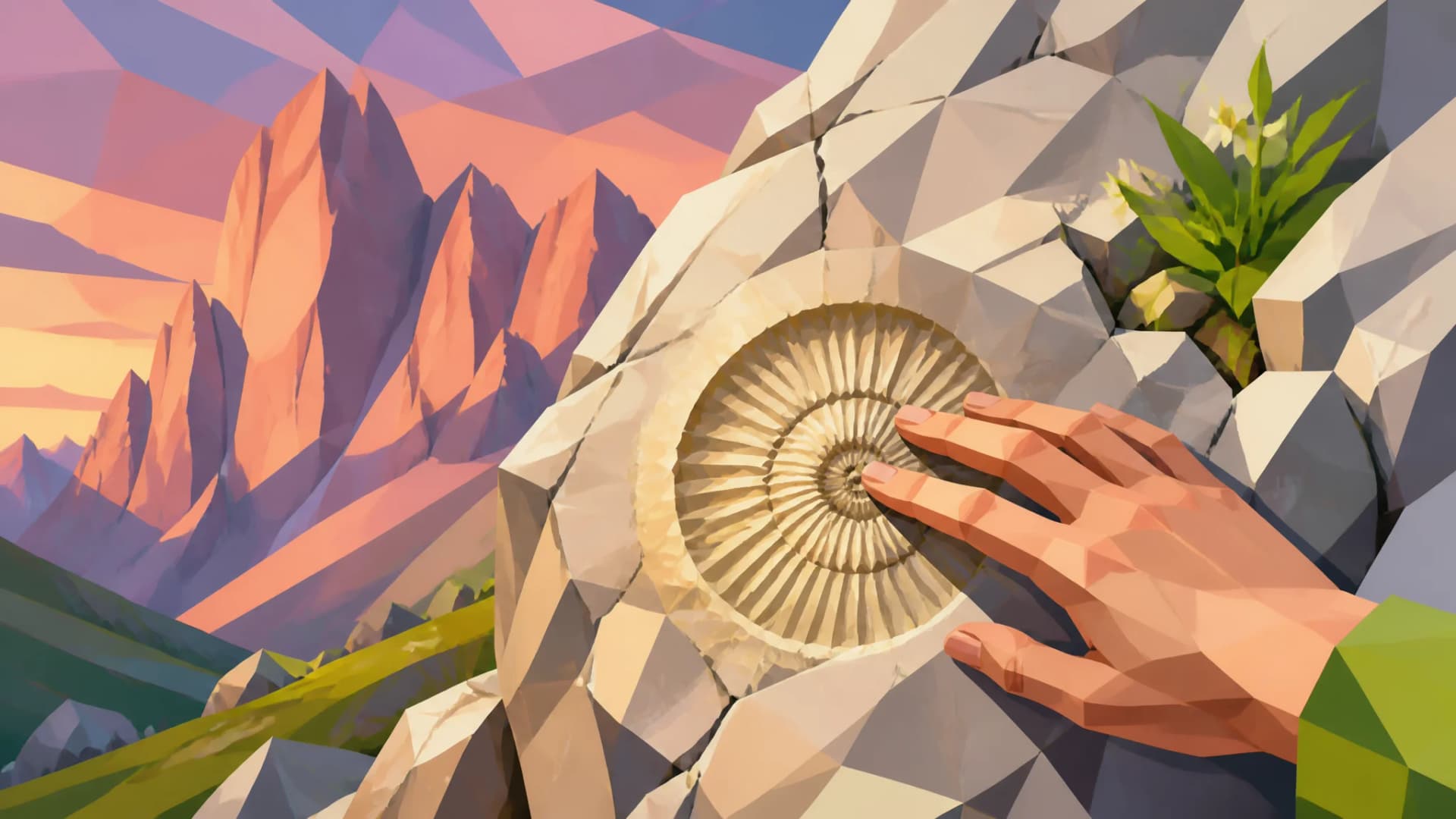
High in the Dolomites of northern Italy , a hiker can rest a finger on a seashell . It is a seashell pressed into the pale gray rock . The nearest beach lies more than three thousand meters below , yet the shell sits where it grew . That shell is a fossil from the Triassic period , roughly 250 to 200 million years ago . Back then , a warm tropical sea covered this corner of Europe . Corals , shells , and algae built enormous reefs and quiet lagoons in the shallow water . When the sea disappeared , the story was not over . Over millions of years , the slow collision of continents pushed the old sea floor upward . The reefs hardened into rock and rose into the sky as mountains . Climbers today still find corals and seashells at altitudes above 3,000 meters . The rock itself carries the name of a French geologist , Déodat de Dolomieu . In 1791 he described the strange pale mineral , and scientists later called it dolomite in his honor . The mineral gave its name to the whole range , and in 2009 UNESCO added the Dolomites to its World Heritage list . The highest peak of the range is the Marmolada , which reaches 3,343 meters . Italians also call the range the Pale Mountains , because the dolomite rock is so light in color . Under the midday sun , each mountain looks almost white , like a wall of old coral , which it is . In the evening , the light changes everything . The setting sun turns the pale rock a deep pink , and the whole range glows softly . In Ladin , the old language of these valleys , this glow has its own name : enrosadira . When the pink light fades , the seashell is still there in the rock , waiting for another morning , three thousand meters above the sea .