Tap a sentence to see it in Spanish, and tap the book to study it. The speaker plays one sentence, the round button plays a paragraph, and the player at the bottom reads the whole story. Press T to show or hide every translation.
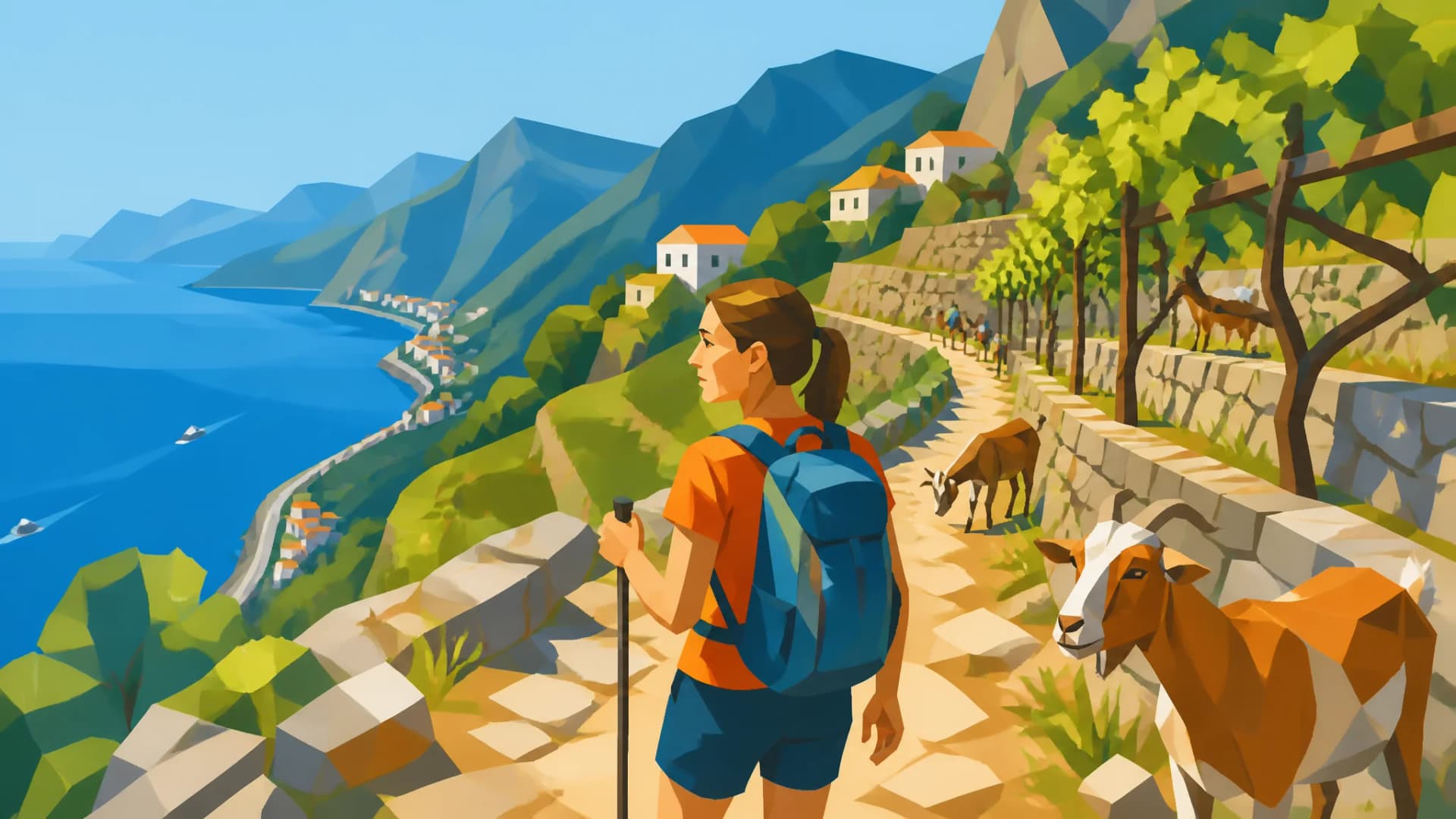
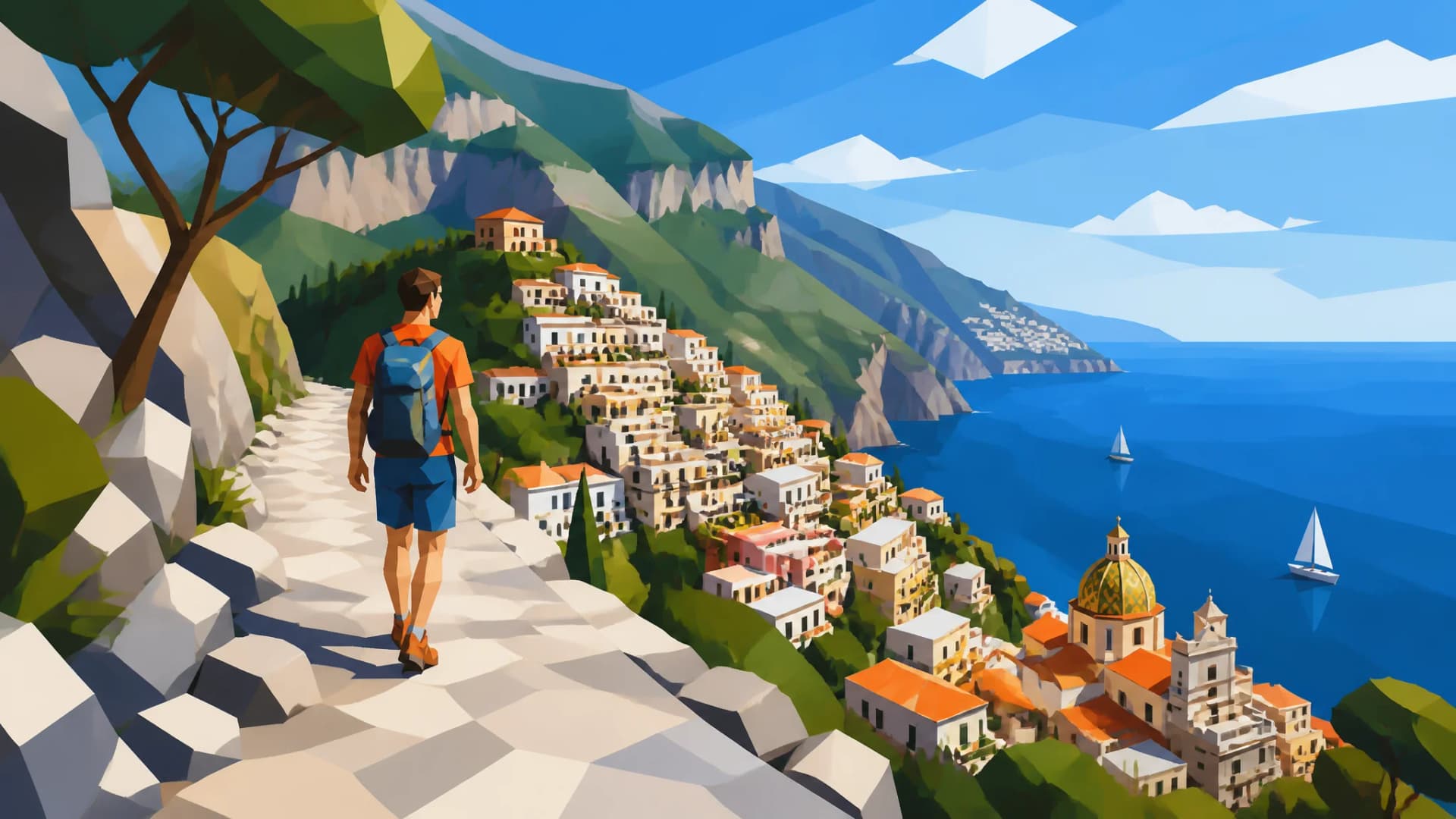
Down on the Amalfi Coast , the famous coastal road is a slow river of buses and scooters . The Amalfi Drive , the SS163 , has carried traffic along these cliffs since workers finished it in the mid-19th century . This footpath , however , runs hundreds of meters above the noise , far older than any road . Italians call it the Sentiero degli Dei , the Path of the Gods . The footpath begins in Bomerano , a quiet hamlet of Agerola in the Lattari mountains , and ends in Nocelle , high above Positano . It runs about 7.8 kilometers , and for much of the way it stays between 500 and 650 meters above the sea . Before the coast road existed , paths like this one were the only connections between villages . This stretch was a mule track , and for centuries mules carried wood , cheese , and lemons between the mountain hamlets . Today you follow the same line the mules once took . The path passes grazing goats and terraced vineyards , held up by dry - stone walls . On clear days the view reaches the island of Capri and the Faraglioni , three rock towers floating off its shore . Since 1997 the whole Amalfi Coast has been a UNESCO World Heritage site , and from up here it is easy to see why . At Nocelle the path ends and the descent begins . About 1,700 steps drop down to the road into Positano , and your knees will complain long before you reach the bottom . In Positano , order a lemon granita and drink it slowly near the beach . Above you , the traffic still crawls along the SS163 . Look higher , to the ridge where the old mule track runs quiet between the villages , and you may decide the gods chose their path well .