Tap a sentence to see it in Spanish, and tap the book to study it. The speaker plays one sentence, the round button plays a paragraph, and the player at the bottom reads the whole story. Press T to show or hide every translation.
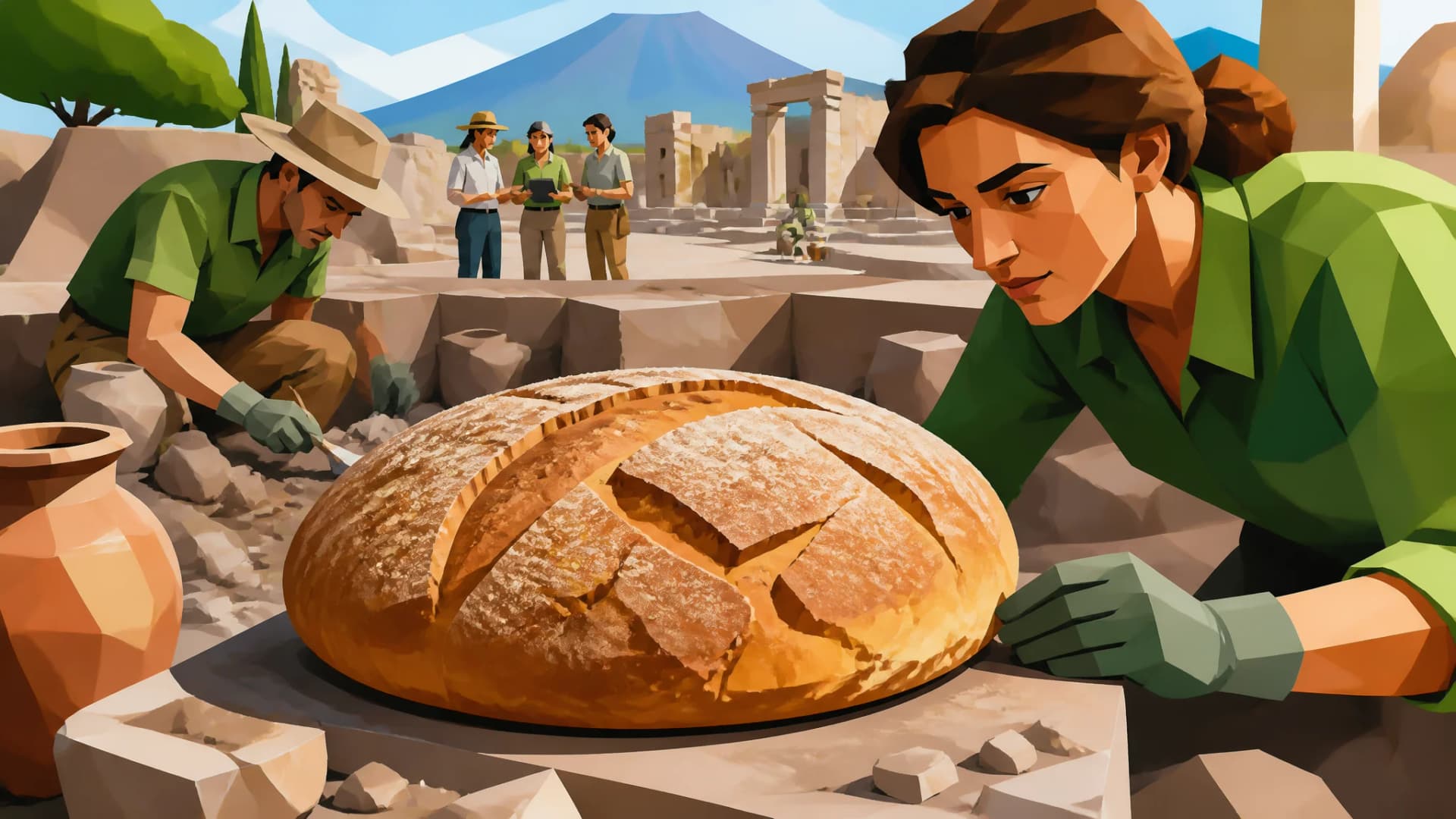
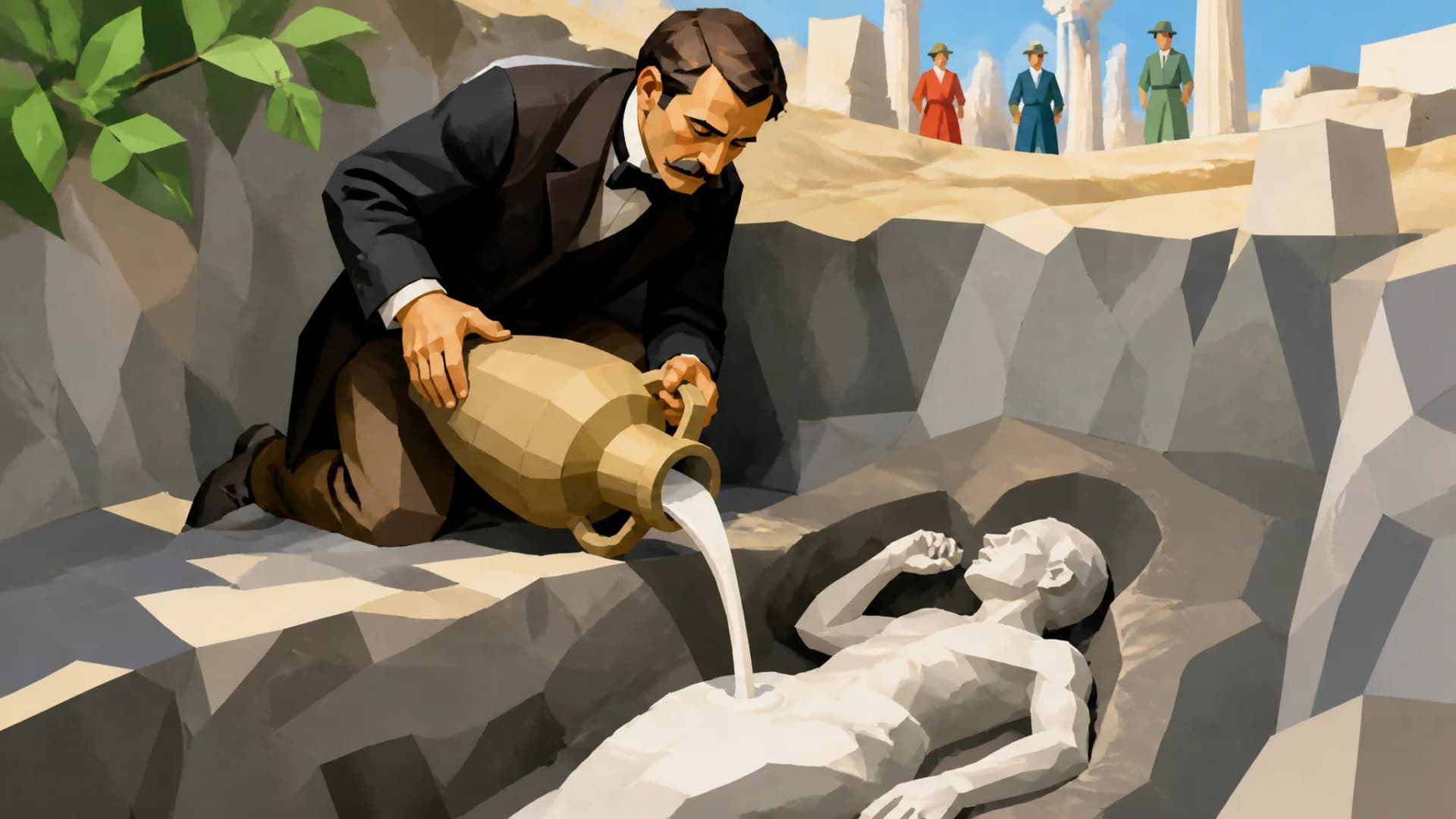
In the archaeological museum of Naples , visitors can see a loaf of bread . Thousands of people stop in front of it every year . It is round , dark , and as hard as stone , and it is almost two thousand years old . The loaf comes from Pompeii , a Roman town near today 's Naples . In the year 79 , the volcano Vesuvius erupted , and within a day the whole town was buried under meters of hot ash . One of the people working that morning was a baker named Modestus . He had just put 81 loaves into his oven when the sky turned black . Like everyone else , he had to run for his life . The ash sealed the oven like a box . The loaves inside did not burn away ; they slowly turned to charcoal and kept their shape perfectly . Romans marked this round bread into eight equal parts before baking , so it was easy to break and share . The result looks not so different from a pizza cut into slices today . The bakery was found again in 1862 , during the great excavations of Pompeii . The 81 loaves of the baker were still sitting in the oven , exactly where he had left them that day . The loaf in the museum tells a quiet story . One ordinary morning , a baker began his work and never came back . His bread , however , has waited for us for almost two thousand years .