Tap a sentence to see it in Spanish, and tap the book to study it. The speaker plays one sentence, the round button plays a paragraph, and the player at the bottom reads the whole story. Press T to show or hide every translation.
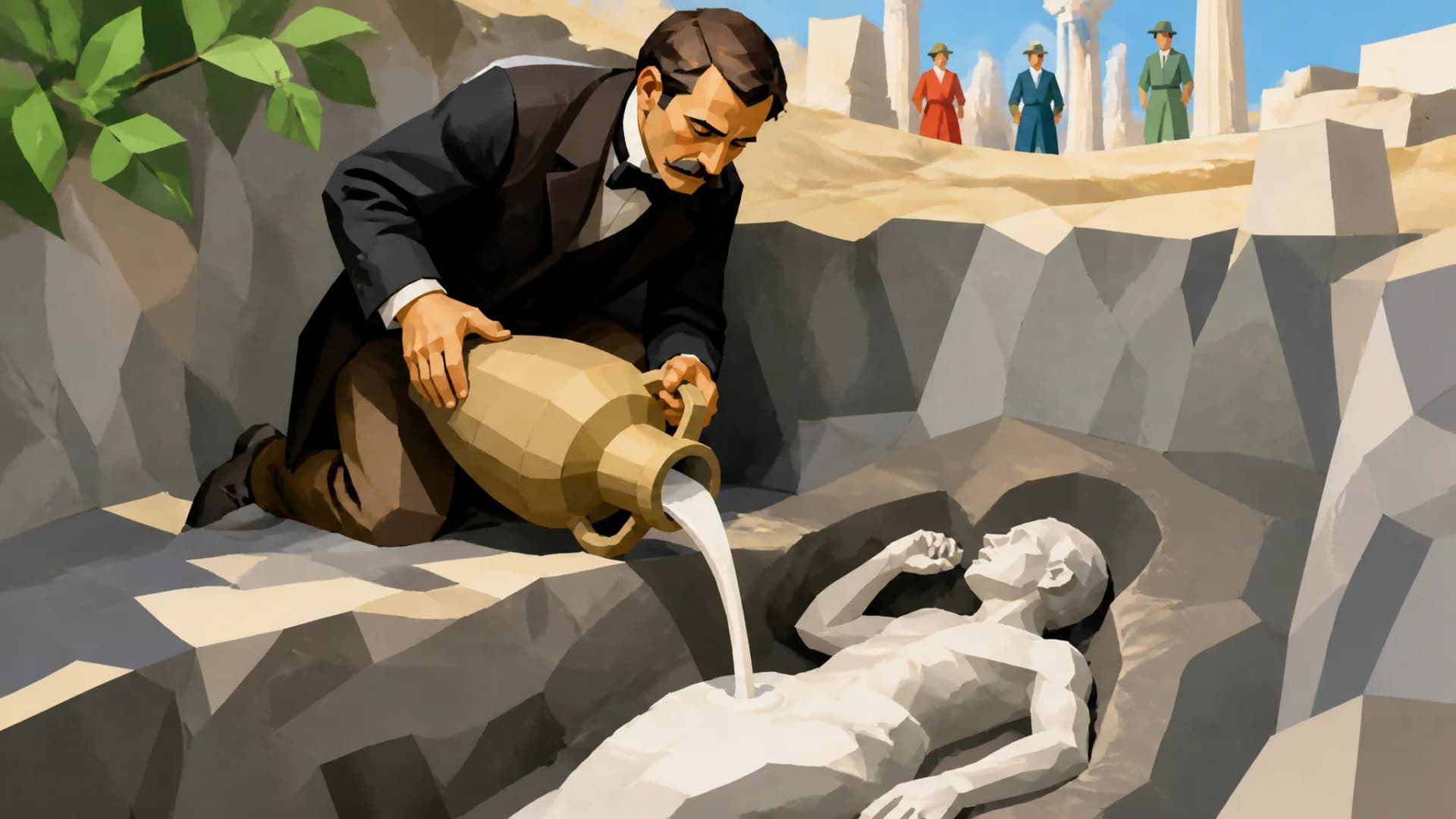
In 1863 , Giuseppe Fiorelli knelt over the excavated ground at Pompeii and poured liquid plaster into a hole . He was the site 's newly appointed director , and the hole was not empty in any ordinary sense . When Vesuvius erupted in 79 CE , a torrent of volcanic ash buried the city within hours . The ash pressed against every surface — skin , cloth , a bent elbow — and slowly hardened into rock . Over the following centuries , the organic material inside decayed and vanished , leaving a hollow negative of the body preserved in the solid stone . Fiorelli understood that the void was itself a record . By filling it with plaster , he could retrieve the exact shape of what had been there . The plaster set , the surrounding ash was carefully removed , and a human figure appeared . The results were precise enough to show a man raising his arm across his face in a last gesture of protection . A child lay curled on its side , knees drawn up . The cloth of a tunic showed individual folds . These casts are still on display in Pompeii . Fiorelli 's insight was not merely technical . It changed what ruins could tell us . Before his method , excavators recovered bones and objects . After it , they recovered posture , reflex , and the specific shape of a person 's terror . A void , it turns out , can hold more than stone .