Tap a sentence to see it in Spanish, and tap the book to study it. The speaker plays one sentence, the round button plays a paragraph, and the player at the bottom reads the whole story. Press T to show or hide every translation.
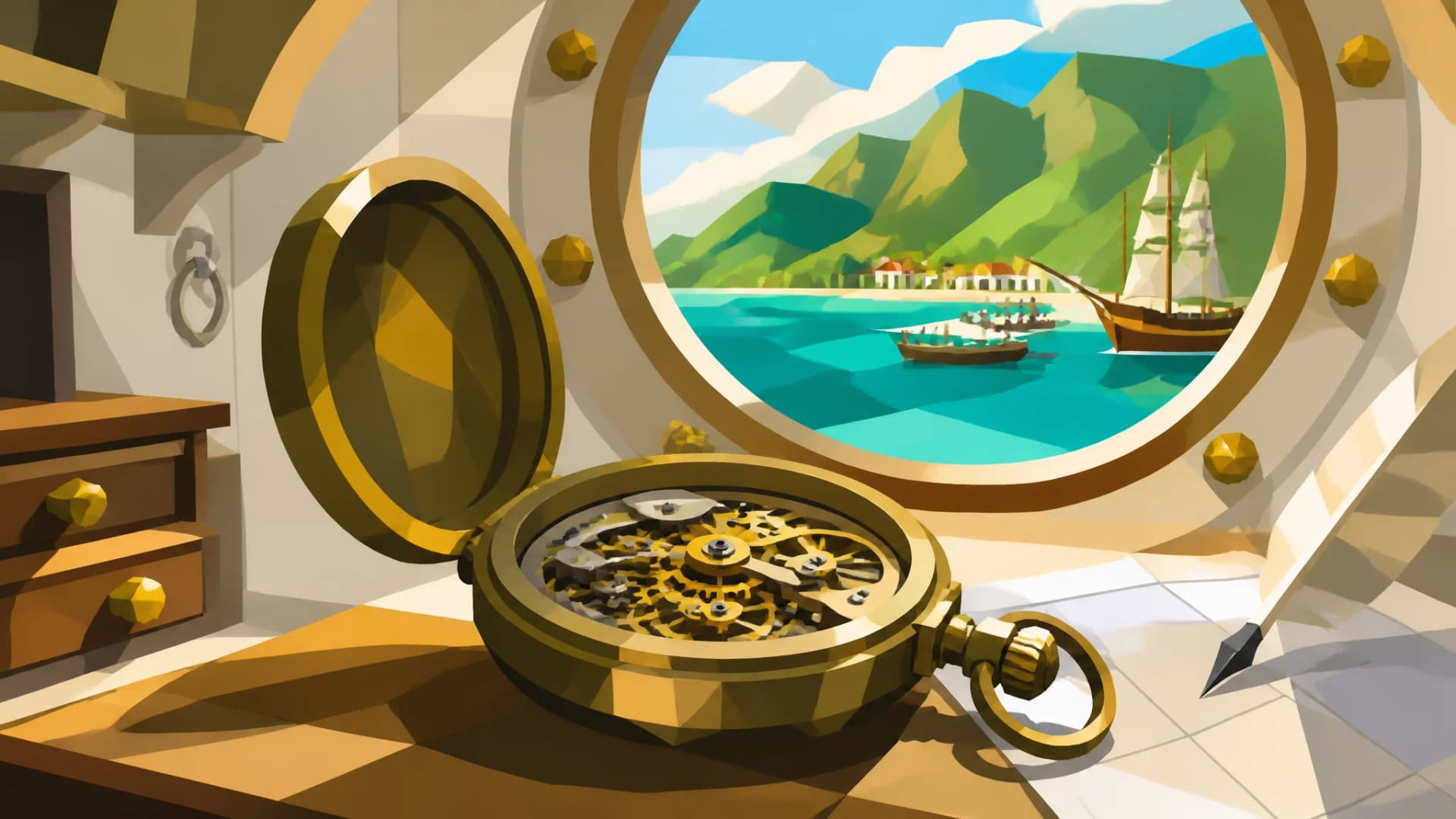
A sailor in the 1700s could measure latitude with reasonable confidence by watching the angle of the sun at noon . Longitude was a different matter entirely . Without knowing their east - west position , crews miscalculated their location by hundreds of kilometres . Reefs and rocky coastlines that did not appear on their reckoning ended voyages without warning . In 1714 , the British Parliament passed the Longitude Act , offering £ 20,000 to whoever delivered a practical solution . Astronomers dominated the early attempts , proposing methods based on the moon 's position . A Lincolnshire carpenter named John Harrison pursued a quieter idea . Harrison was self - taught and worked outside the academic establishment . His reasoning was elegant . A ship at sea carries a clock fixed to the time of its home port , say London . The sailor observes the exact moment the sun reaches its highest point locally . Every hour of difference between local noon and the clock represents fifteen degrees of longitude travelled east or west . A reliable clock was therefore all it took . Harrison spent four decades refining the mechanism . His fourth marine timekeeper , a compact watch - sized instrument , sailed to Jamaica in 1761 . On arrival , it had drifted by roughly five seconds — an error of under two kilometres at that latitude . The Longitude Board resisted paying Harrison in full for years . He was not finally settled until 1773 . Accurate timekeeping became the foundation of safe ocean navigation . The logic of comparing a fixed reference time to a local observation still sits at the heart of every GPS receiver working today .