Tap a sentence to see it in Spanish, and tap the book to study it. The speaker plays one sentence, the round button plays a paragraph, and the player at the bottom reads the whole story. Press T to show or hide every translation.
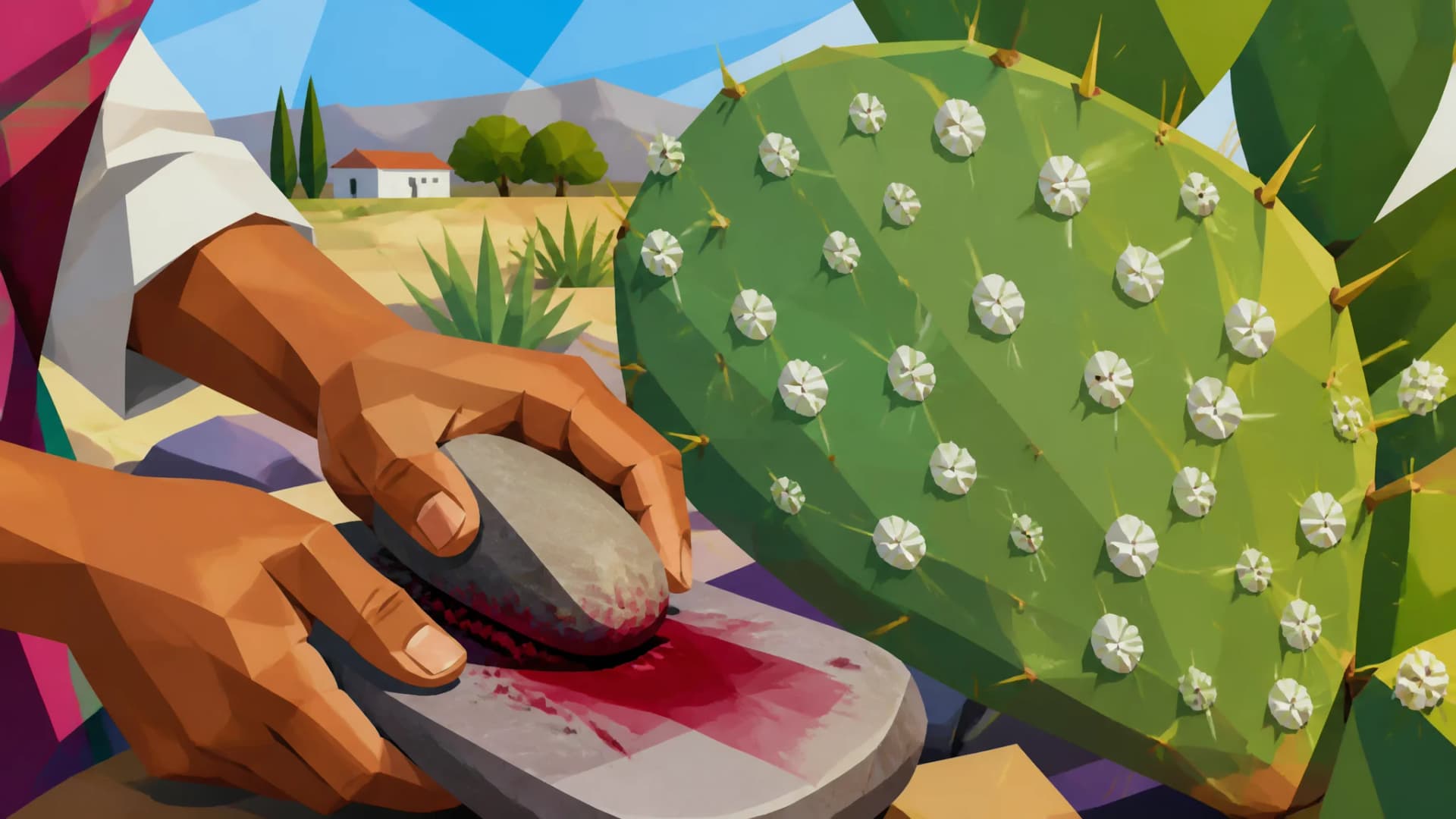
On the pads of a prickly pear cactus in central Mexico , a tiny white insect feeds in silence . It is the cochineal , Dactylopius coccus , and for centuries it has been one of the most valuable creatures on Earth . Indigenous people of the Oaxaca region cultivated cochineal long before Spanish contact . They dried the female bugs and crushed them to produce a vivid crimson pigment . A single kilogram of dye required roughly 80,000 insects . Hernán Cortés encountered the dye during his conquest of Mexico and sent samples back to Spain in the 1520s . European weavers were astonished . The reds they had previously achieved from madder root or kermes were dull by comparison . Cochineal produced a scarlet of extraordinary intensity that resisted fading in sunlight . By the mid-1500s , cochineal was the second most valuable export from New Spain after silver . The Spanish Crown guarded the secret of its origin jealously , selling it simply as grana , or grain . For a century , buyers across Europe could not agree on its origin : seed , mineral , or worm . Dutch and English merchants eventually smuggled cactus cuttings and live insects out of Mexico in the 1700s , breaking the monopoly . Today the dye appears in food , cosmetics , and textiles under the name carmine or the additive code E120 . A bug that built trade routes across the Atlantic still quietly colors the world .