Tap a sentence to see it in Spanish, and tap the book to study it. The speaker plays one sentence, the round button plays a paragraph, and the player at the bottom reads the whole story. Press T to show or hide every translation.
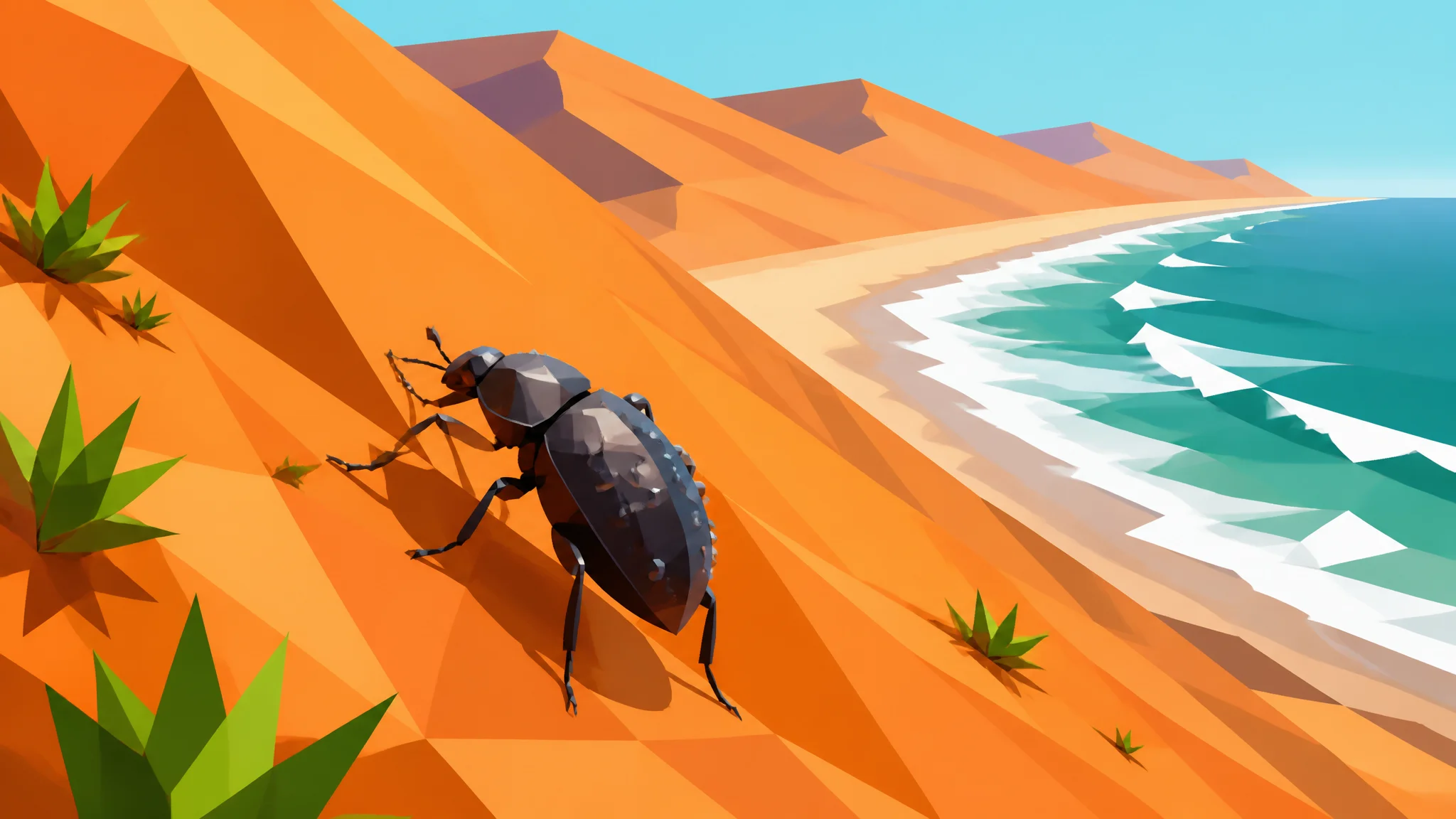
Stand on the coast of Namibia and you can see two worlds at once . To the east , enormous orange dunes rise up to 300 metres high . To the west , the cold South Atlantic stretches to the horizon . The Namib Desert meets the ocean here , and the collision shapes everything that lives between them . The Namib is at least 55 million years old , making it the oldest desert on the planet . The Sahara , by comparison , formed only around 7 million years ago . Age alone sets the Namib apart . Its dryness comes from the Benguela Current , a flow of cold deep water that moves northward along the Namibian coast . Cold ocean water cools the air above it . Cool air holds little moisture , so clouds rarely form and rain almost never falls . Some parts of the coast receive less than 15 millimetres of rain per year . Yet that same cold current generates something vital : fog . Each morning , dense Atlantic fog drifts up to 100 kilometres inland . The Namib fog beetle , Stenocara gracilipes , harvests this moisture by angling its body into the wind . Droplets collect on its back and run directly toward its mouth . Larger animals have adapted just as precisely . Desert - adapted elephants dig with their trunks in dry riverbeds , reaching groundwater several metres below the surface . Lions have learned to patrol the Skeleton Coast for Cape fur seals . The Namib teaches a clear lesson . Extreme environments do not stop life .