Tap a sentence to see it in Spanish, and tap the book to study it. The speaker plays one sentence, the round button plays a paragraph, and the player at the bottom reads the whole story. Press T to show or hide every translation.
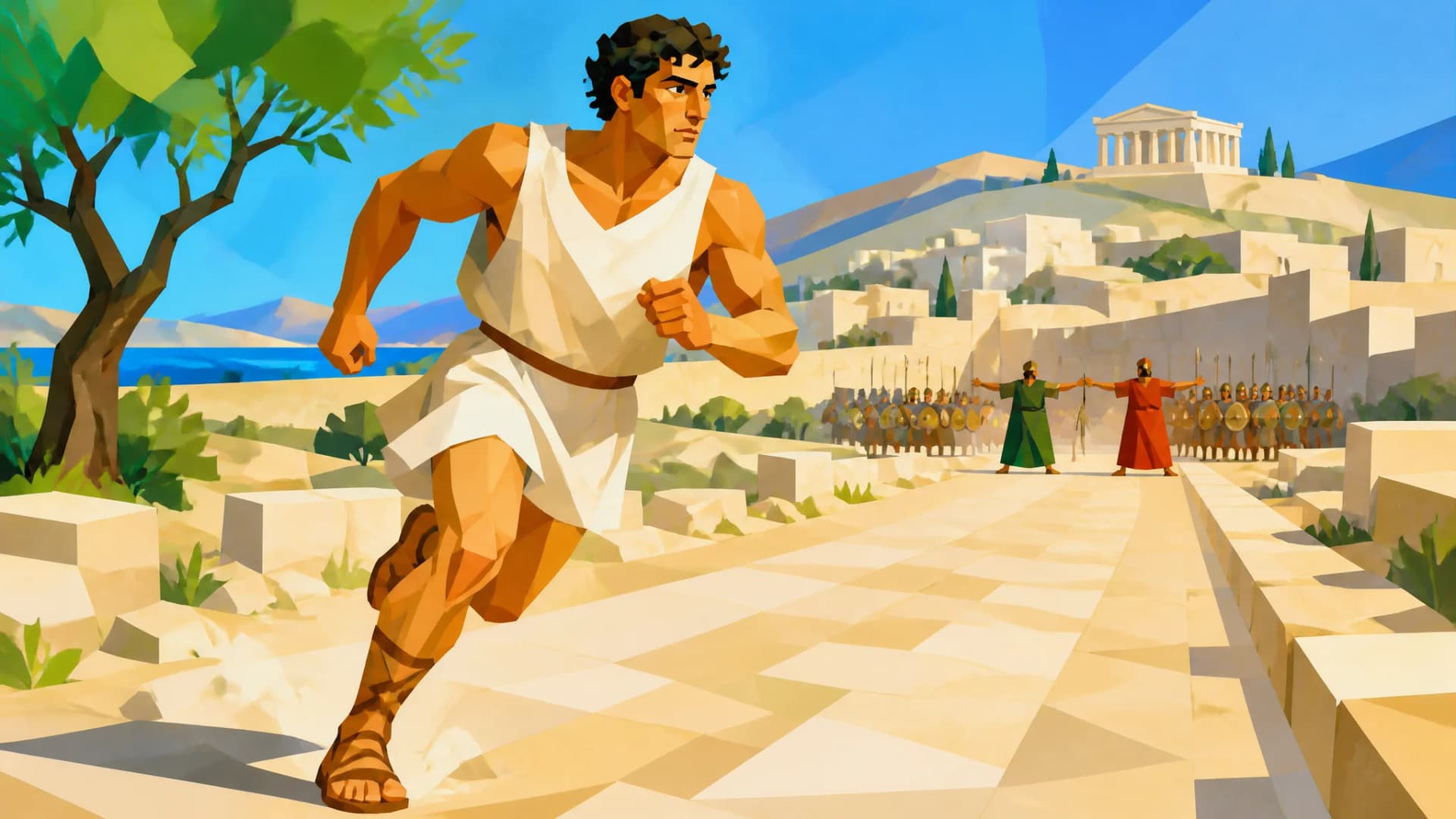
A runner leaves his city . His city is at war with a neighbour . Yet he must reach Olympia in time for the Games . For this , the Greeks built a formal protection into the calendar . They called it the Ekecheiria , meaning roughly " a staying of hands . " By tradition , it was first declared in 776 BC , before the earliest recorded Olympic Games . Every four years , heralds travelled across Greece to announce it . The truce did not silence the wars . Armies continued to campaign and cities continued to fight . What the Ekecheiria guaranteed was safe passage — for athletes , trainers , and spectators moving to and from Olympia . City - states that violated the truce faced real consequences . They were required to pay a fine to the sanctuary at Olympia . They risked exclusion from the next Games , which was a serious political humiliation . The truce was therefore a negotiation , not a fact of nature . It had to be agreed , announced , and enforced each time . Peace , in this framework , was a political achievement . The United Nations recognised that logic in 1993 . It passed a resolution calling for an Olympic Truce before every modern Games . This formally revived the Ekecheiria for the contemporary world . The resolution asks member states to pause conflicts during the Games period . It carries no enforcement mechanism . Like the ancient version , it depends entirely on whether those in power choose to honour it .