Tap a sentence to see it in Spanish, and tap the book to study it. The speaker plays one sentence, the round button plays a paragraph, and the player at the bottom reads the whole story. Press T to show or hide every translation.
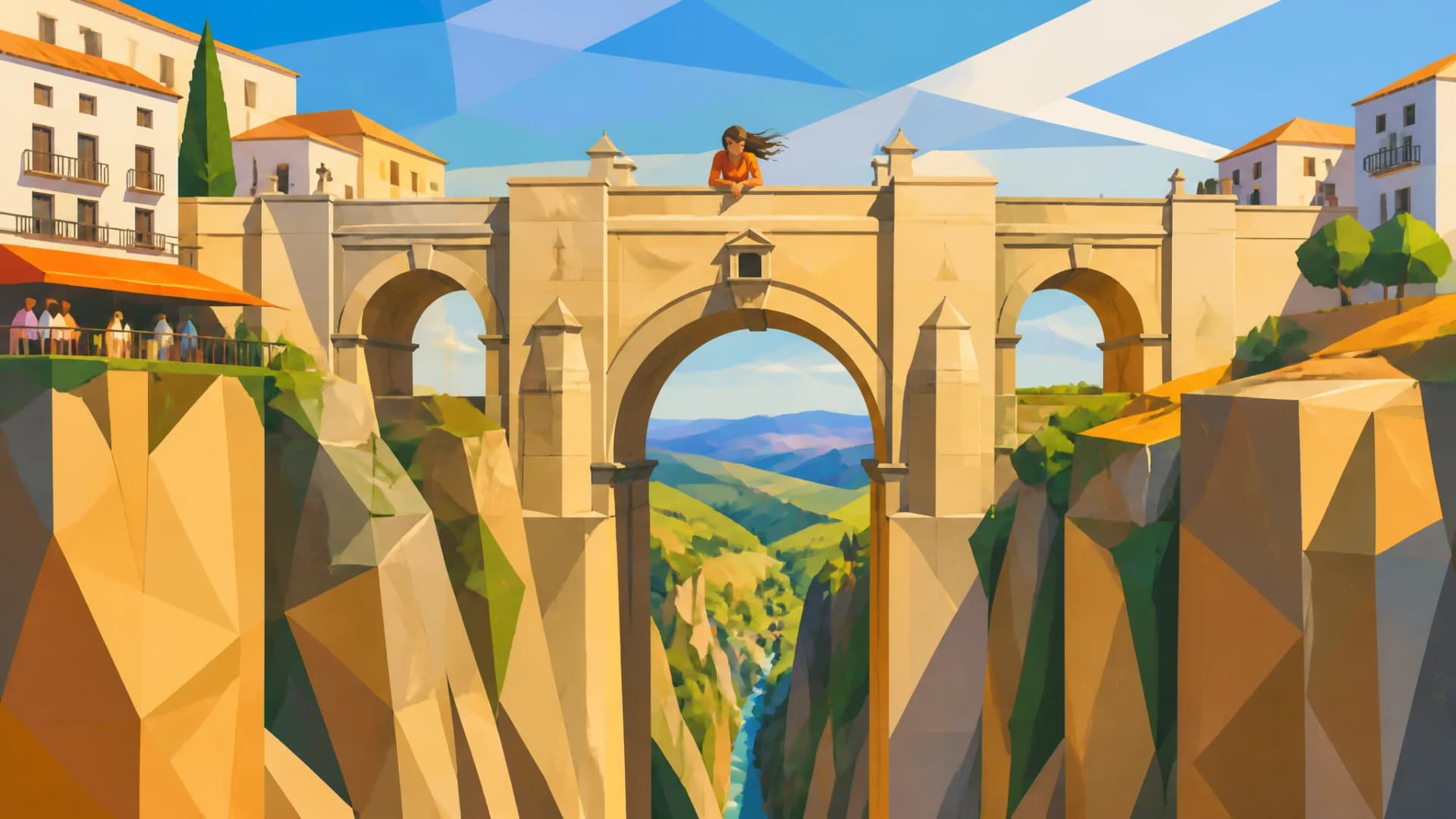
Ronda stands on a high limestone plateau in Andalusia , southern Spain . The first thing that stops you is the gorge . El Tajo cuts straight through the town , dropping around 100 metres to the Guadalevín river far below . The two halves of Ronda sit on opposite rims . For centuries the only way across was a far older , far humbler bridge . The Puente Nuevo changed that . Construction began in the 1750s . The bridge was finally finished in 1793 . You can almost feel that span of decades in the weight of the stone . Cross it on foot and notice how the wind rises from below . It pushes upward through the gorge in a steady , unsettling current . The parapet is solid , but the drop beyond it is not . For the full picture , take the path down into the gorge itself . Two main viewpoints give you the bridge from below . They are the Mirador de Aldehuela and the lower Camino de los Molinos trail . The scale is genuinely hard to process from down there . The arch alone rises far above the gorge floor . Come back to the old town , the Ciudad , as the light softens . Ronda 's vineyards have produced wine since Roman times , and the local red is earthy and worth lingering over . Sit somewhere with an unbroken view of the Puente Nuevo . The stone holds the last warmth of the day . That is the moment to carry home .