Tap a sentence to see it in Spanish, and tap the book to study it. The speaker plays one sentence, the round button plays a paragraph, and the player at the bottom reads the whole story. Press T to show or hide every translation.
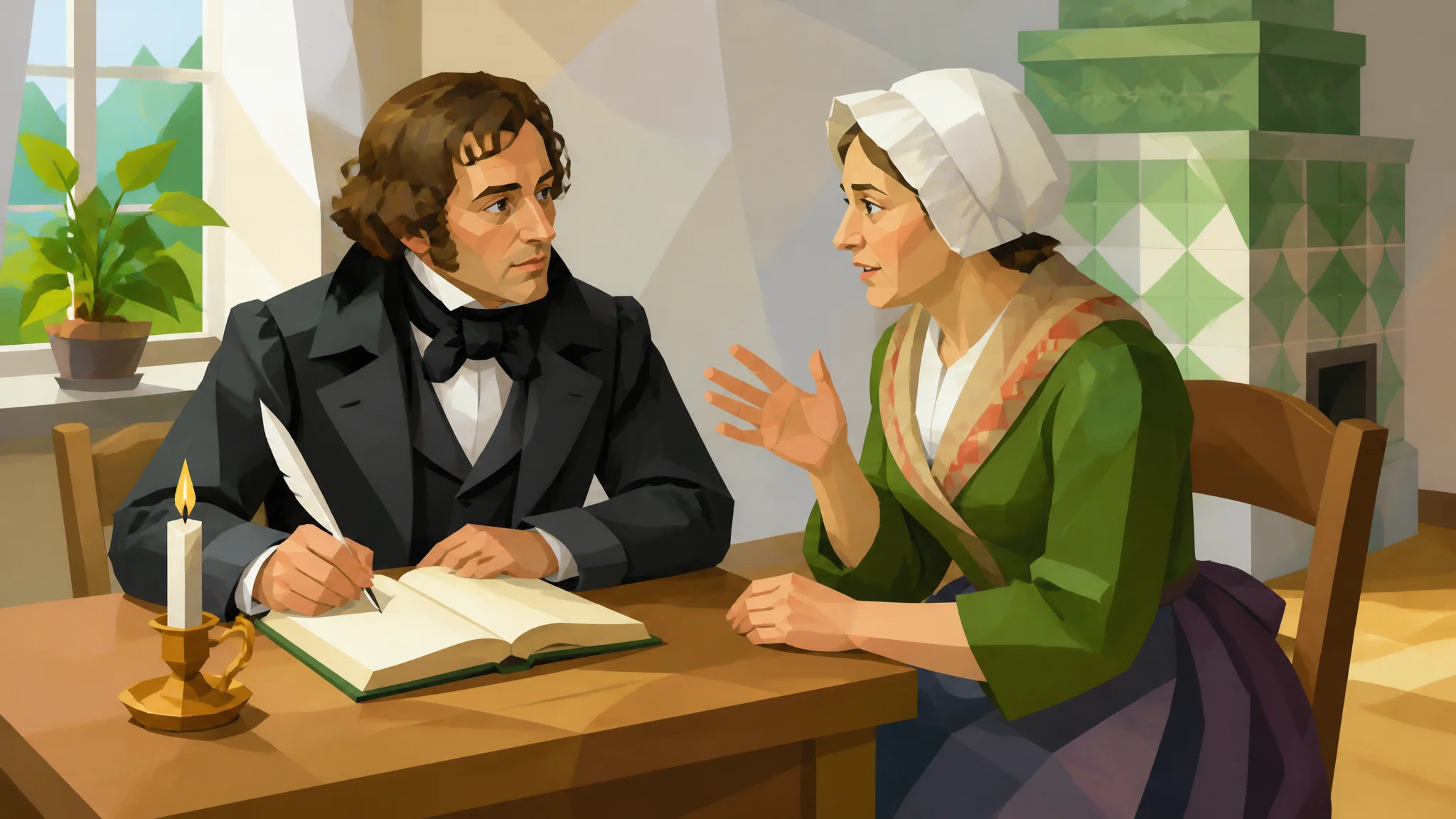
Wilhelm Grimm sits across from a storyteller with a notebook open on his knee . That act of transcription is where the fairy tale as we know it begins — and where it already starts to change . Jacob and Wilhelm published the first volume of their collection , the Kinder- und Hausmärchen , in 1812 . The popular image places them in dark forests , listening to peasants . The reality is more domestic . Most of their informants were educated , middle - class women . They knew the tales from reading as much as from hearing them . The brothers revised the collection across seven editions . With each revision , they added layers of Christian morality and tightened the violence to feel purposeful rather than random . The transformation of Cinderella shows this clearly . In the Grimms ' printed text , doves peck out both eyes of the stepsisters at the wedding . That punishment is absent from the earliest oral variants scholars have traced . The story did not travel from mouth to page unchanged . It arrived on the page as a new thing . This matters because we still treat printed fairy tales as ancient and fixed . Every version that reaches a child in a book reflects an editor 's choices . Which detail to keep , which moral to sharpen , whose telling to trust as the true one — someone decided all of that . The Grimms made those choices in 1812 , then made them again six more times . We inherited the last draft and forgot about the rest .