Tap a sentence to see it in Spanish, and tap the book to study it. The speaker plays one sentence, the round button plays a paragraph, and the player at the bottom reads the whole story. Press T to show or hide every translation.
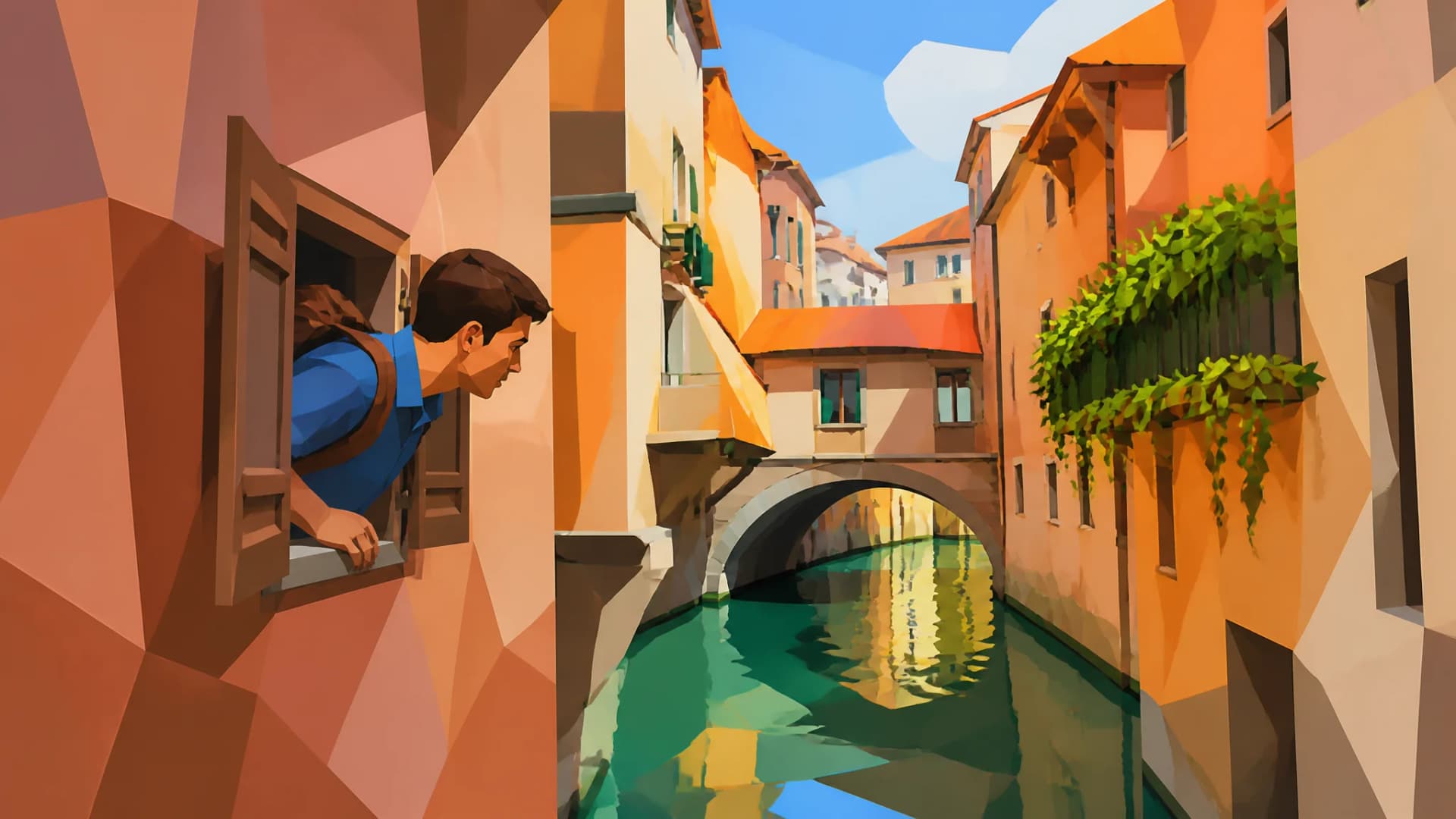
You step off the train in Bologna , in the Emilia - Romagna region of northern Italy . The air smells of cured meat and fresh bread . The city 's famous porticoes stretch above the pavements in every direction . Their terracotta arches form almost 40 kilometres of covered walkways . UNESCO added them to the World Heritage List in 2021 . Most visitors look up at the arches . Fewer look down — and that is where the real discovery waits . Bologna was built on water . A network of medieval canals once threaded through the city . They carried dyed wool and raw silk from the hills to the workshops below . At the industry 's peak , around the 13th century , the canals powered hundreds of mills . Slowly , as the city grew and industry changed , the waterways were paved over . Today most of them run silently beneath your feet . You can find one of the best surviving glimpses at Via Piella , a short walk north of Piazza Maggiore . A small wooden shutter is set into a wall . Push it open and lean forward . Below you , a green canal catches the light between terracotta walls and trailing ivy . It feels like a city within the city . Take the 35 - minute train from Florence or the 2 - hour service from Milan . Arrive before midday , when the light drops into the water cleanest . Carry that image of the hidden canal home . Bologna gives most of itself away in the first hour , and then keeps one thing back just for you .