Tap a sentence to see it in Spanish, and tap the book to study it. The speaker plays one sentence, the round button plays a paragraph, and the player at the bottom reads the whole story. Press T to show or hide every translation.
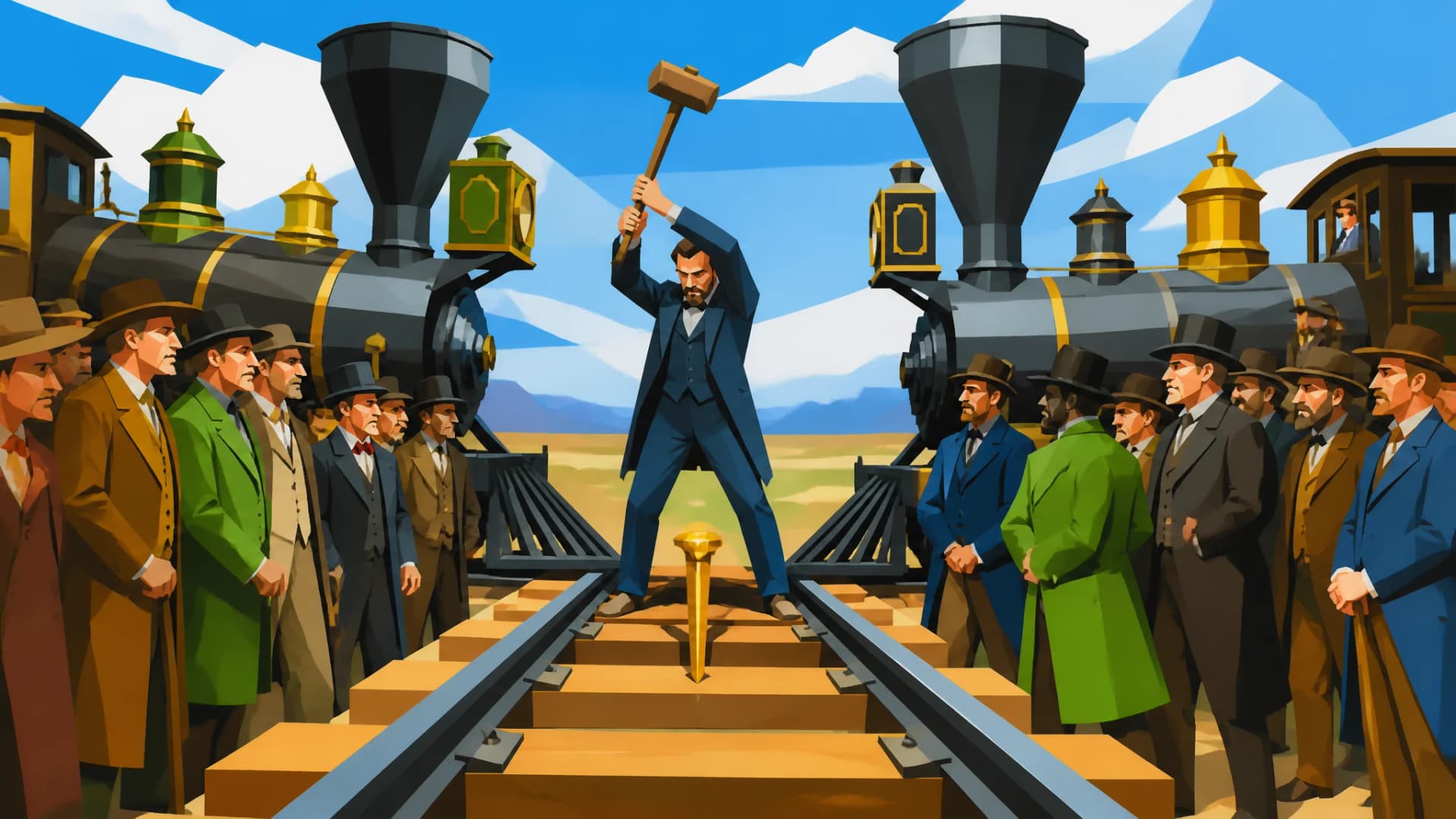
A golden spike sits in Stanford University 's museum today , rarely touched . On 10 May 1869 , a crew drove it into a wooden tie at Promontory Summit , Utah . Within seconds , a telegraph carried the signal to cities across the country . That spike joined the Central Pacific and Union Pacific railroads into a single transcontinental line . The two companies had been building toward each other since 1863 . The Central Pacific pushed east from Sacramento , largely through the Sierra Nevada mountains , using thousands of Chinese immigrant workers . The Union Pacific pushed west from Omaha , crossing the Great Plains . Together they laid about 3,000 kilometres of track in six years . The human consequence was immediate and enormous . The overland journey from New York to San Francisco had taken several months by wagon or ship . The railway cut that to roughly seven days . Passenger numbers surged and freight costs collapsed , pulling settlers deep into the continental interior . That wave of settlement had permanent consequences for the people already living there . Native nations across the plains and the west had inhabited those landscapes for centuries . The railway accelerated land seizure and the near - total destruction of the bison herds those communities depended on . The golden spike is a genuine turning point in American history . It is also a reminder that connection for some can mean displacement for others .