Tap a sentence to see it in Spanish, and tap the book to study it. The speaker plays one sentence, the round button plays a paragraph, and the player at the bottom reads the whole story. Press T to show or hide every translation.
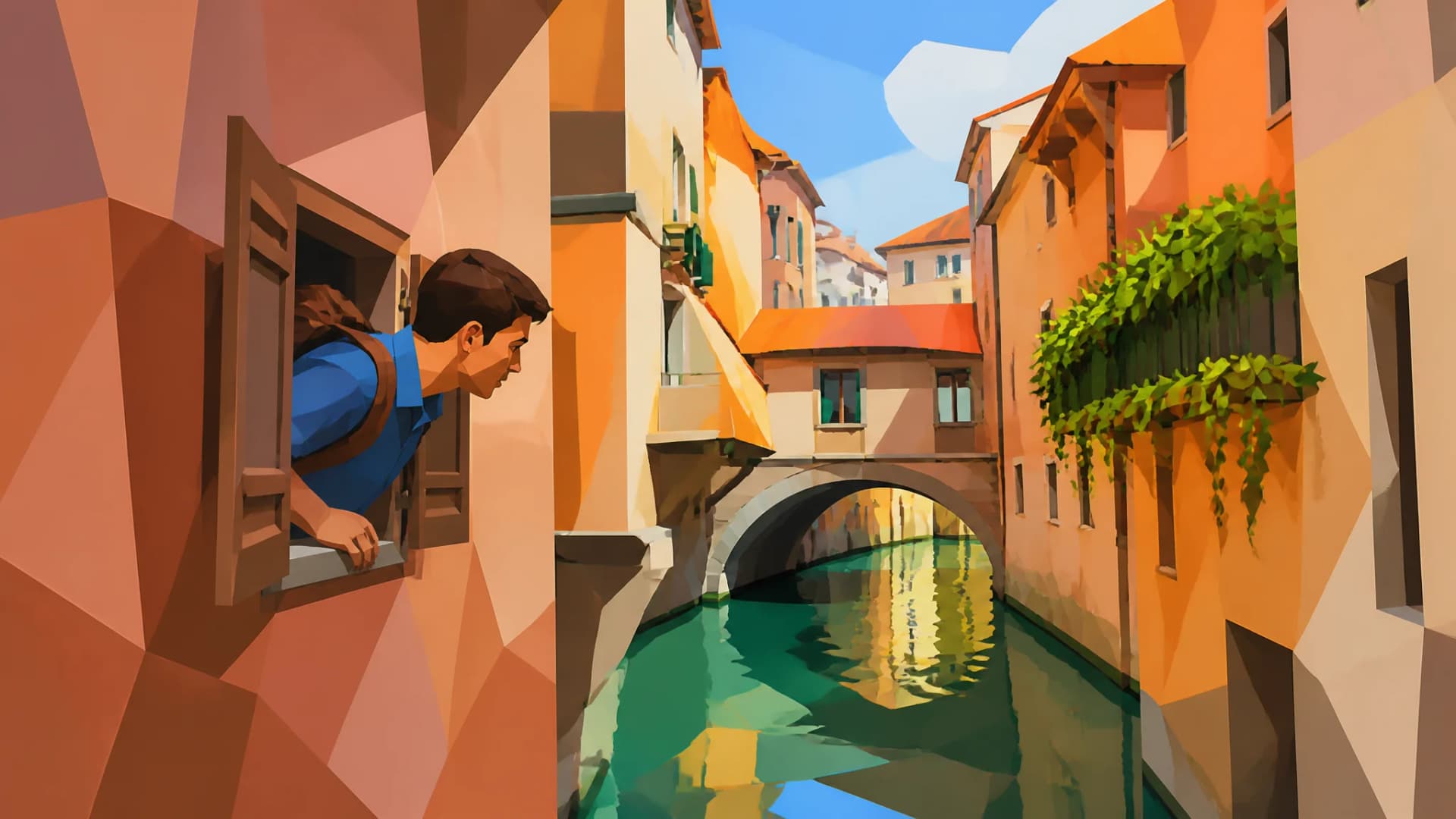
Through the window of a houseboat , the canal is at eye level . You see green water , a brick bridge and a row of tall houses on the far bank . This is Amsterdam , in North Holland , in the Netherlands , and here the water is the street . The city has more than one hundred kilometres of canals and about 1,500 bridges . The 17th - century canal ring at its heart has been a UNESCO World Heritage Site since 2010 . Houseboats lie along many of these canals , and along wider water outside the old centre too . There are more than two thousand of them . Not every houseboat is the same . The old ones are converted cargo boats , long and low , with narrow rooms . The newer ones are houses built on concrete floats , simple and boxy , like a small cottage on a plate . Either way , each boat is tied to the city . A cable and a pipe run from the hull across the quay , and every houseboat must be connected to the city sewer . To see the inside of one , visit the Houseboat Museum on the Prinsengracht , in the Jordaan . Its boat was built as a cargo ship in 1914 and became a home in 1967 . You can see the original bedrooms and the living space from the 1967 conversion , with the canal just outside . To sleep on one , look at the city 's tourist site . It lists houseboats as a place to stay , next to bed and breakfasts and apartments . At dusk , the brick bridges glow in the last light and lamps come on in the tall houses . The water lies just outside the glass . You sit still with a warm cup , and the canal turns from green to black , with the lamps shining in it like gold .