Tap a sentence to see it in Spanish, and tap the book to study it. The speaker plays one sentence, the round button plays a paragraph, and the player at the bottom reads the whole story. Press T to show or hide every translation.
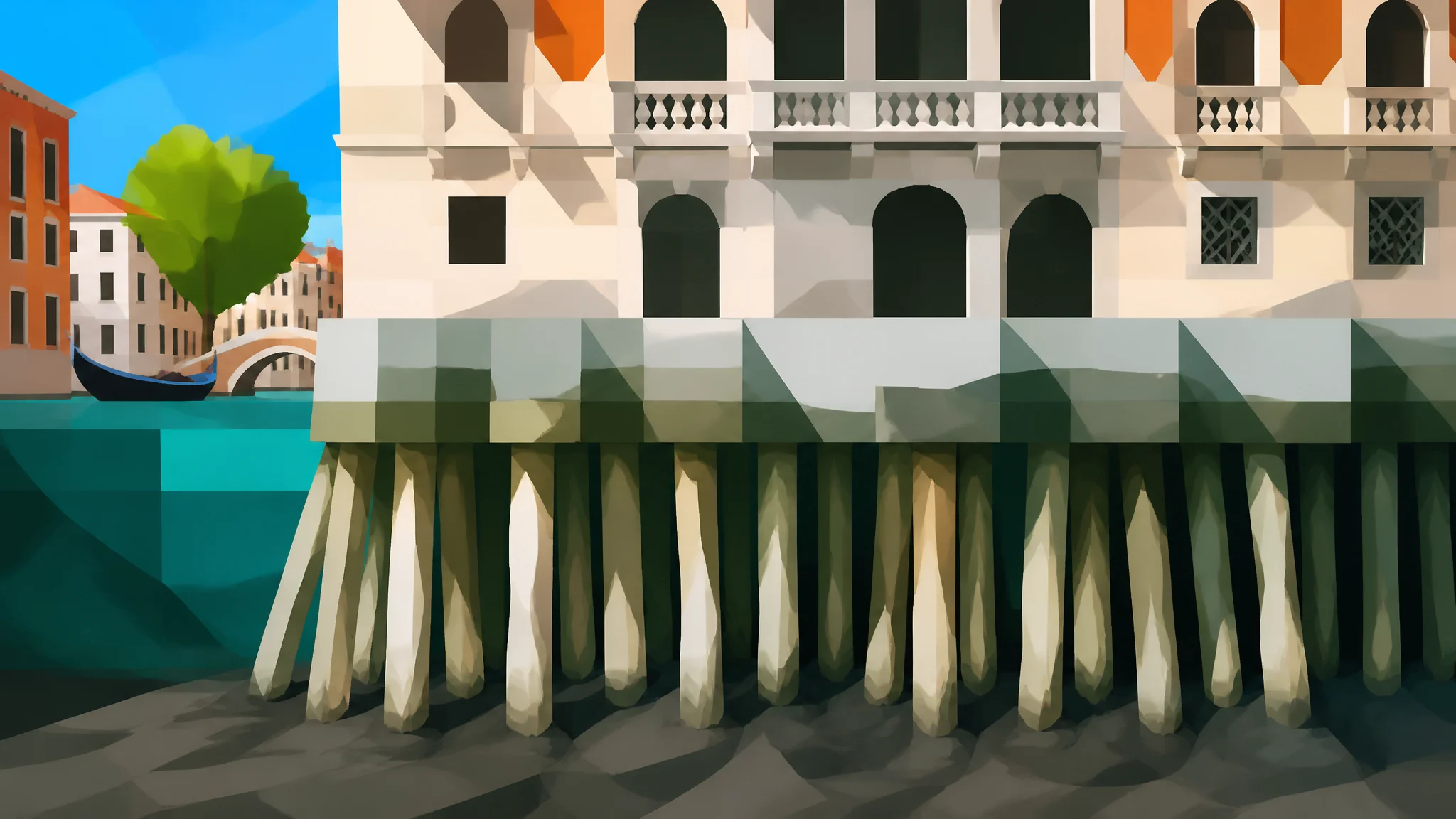
Venice looks like a city that floats . Visitors see canals , boats , and centuries - old palaces rising straight from the water . Its best secret , however , lies below the surface : Venice stands on a forest . The city sits in a lagoon , where the ground is soft , wet mud . Mud like that can not carry heavy stone buildings . The first Venetians , who arrived more than a thousand years ago , solved the problem with trees . Workers drove long wooden poles deep into the mud . They placed them close together , row after row , sometimes thousands under a single building . On top of the poles they laid wooden platforms , and on the platforms they built in stone . Here is the surprising part . Under the mud there is almost no oxygen , and without oxygen wood does not rot . Instead , over the centuries , the water and the minerals in it slowly made the poles harder and harder , almost like stone . The most famous example is the church of Santa Maria della Salute . When construction began in 1631 , workers drove more than a million poles into the floor of the lagoon . The great white church still rests on them today . So the next time you walk through Venice , remember what is under your feet . The palaces rest on an ancient , hidden forest , and under every street and canal , the trees are still holding up the city .