Tap a sentence to see it in Spanish, and tap the book to study it. The speaker plays one sentence, the round button plays a paragraph, and the player at the bottom reads the whole story. Press T to show or hide every translation.
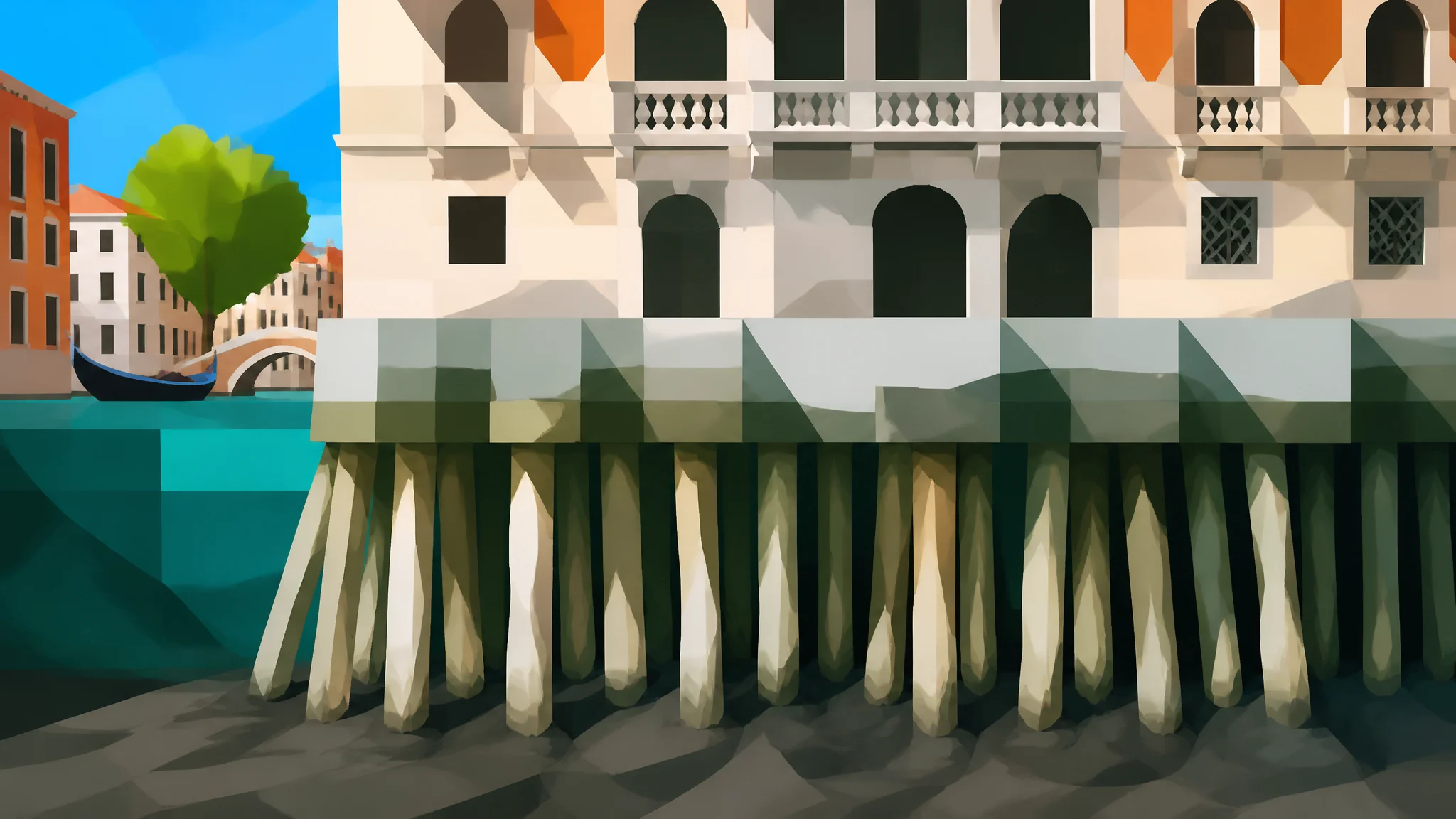
Beneath the canals and palaces of Venice , there is a forest . It is made of millions of wooden piles driven deep into the lagoon floor . That buried forest has held the city up for more than a thousand years . Builders chose alder for almost all of these piles . Alder has an unusual property : it resists decay when kept permanently submerged and deprived of oxygen . Timber that breathes air rots quickly , but timber sealed inside cold , airless mud behaves very differently . Work began in the early medieval period and continued for centuries as Venice expanded across its islands . Each new building required fresh rows of piles hammered down until they reached firmer sediment below . Over time , the mud surrounding the piles locked out every trace of oxygen . Without it , the wood could not decompose in the ordinary way . Instead it slowly mineralised , its fibres replacing themselves with minerals from the lagoon . Today those piles are almost as hard as stone . The transformation is remarkable . The material is no longer quite wood and not quite rock . Yet it bears the load of one of the heaviest , most elaborate cities ever built on water . Venice still sinks gradually , pushed down by the weight above and pulled by settling sediment below . But the piles themselves do not fail . The buried forest endures , and so does the city resting on it .